Introduction
Eco-friendly gardening is quickly becoming one of the biggest trends across the United States. Homeowners are adopting sustainable gardening practices that are environmentally responsible, cost-effective, and visually appealing. According to recent industry reports, 2025 is expected to see a significant rise in green gardening initiatives, ranging from organic soil management to smart irrigation systems. This trend reflects the growing focus on climate-conscious living, health, and modern home improvement.
Why Eco-Friendly Gardening is Growing in the USA
Several factors are driving the surge of eco-friendly gardening across American homes:
| Factor | Description |
|---|---|
| Environmental Awareness | Increased focus on reducing carbon footprint and chemical use in gardens. |
| Sustainable Materials | Use of recycled, biodegradable, and renewable materials for planters, mulch, and fertilizers. |
| Government Initiatives | Local grants and workshops encourage native plants, water conservation, and biodiversity. |
| Health & Wellness | Organic gardening promotes healthier eating and chemical-free living environments. |
Eco-friendly gardening is not just a lifestyle choice—it’s also a booming market, with growing demand for sustainable gardening products and services in the US Home & Garden sector.
Top Eco-Friendly Gardening Practices in 2025
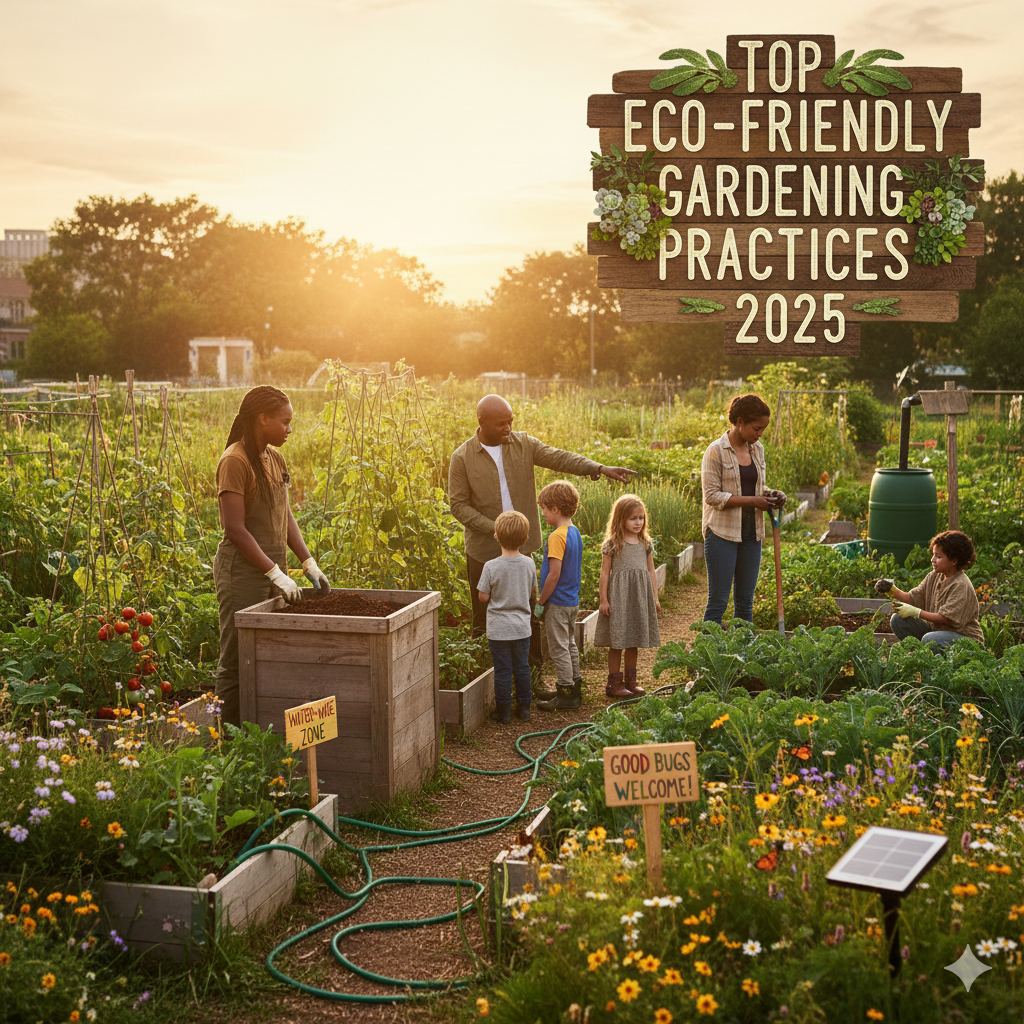
1. Native Plants and Pollinator Gardens
Planting native flowers, shrubs, and trees attracts bees, butterflies, and birds, supporting biodiversity while requiring less maintenance.
2. Organic Fertilizers and Composting
Chemical fertilizers are being replaced by organic alternatives. Composting kitchen scraps and garden waste enriches soil naturally and reduces landfill contribution.
3. Water Conservation Techniques
Rainwater harvesting, drip irrigation, and water-efficient sprinklers help reduce water consumption while lowering household utility bills.
4. Raised Beds and Container Gardening
Raised beds and container gardens allow better soil control, minimize pest issues, and make gardening feasible even in small urban spaces.
5. Smart Garden Technology
Modern tools, such as solar garden lights, smart irrigation systems, and garden sensors, help maintain sustainable gardens efficiently while saving energy and water.
Market Impact of Eco-Friendly Gardening
| Segment | 2025 Forecast | Key Opportunities |
|---|---|---|
| Organic Plants & Seeds | $5.5 billion | High demand for native and non-GMO plants |
| Smart Irrigation Systems | $2.8 billion | Water-saving technology adoption grows |
| Composting Products | $1.2 billion | Eco-conscious homeowners investing in composting |
| Eco-friendly Garden Accessories | $3.4 billion | Biodegradable pots, recycled tools, solar lights |
The overall US Home & Garden Market is projected to reach $50 billion in 2025, with sustainable gardening products accounting for a significant revenue share.
Benefits of Eco-Friendly Gardening for Homeowners
- Cost Savings – Composting and rainwater harvesting reduce long-term expenses.
- Environmental Benefits – Sustainable gardens decrease chemical runoff and support local wildlife.
- Health Benefits – Organic vegetables and flowers contribute to chemical-free living.
- Community Impact – Eco-friendly gardens inspire neighbors, promoting greener neighborhoods.
Conclusion
Eco-friendly gardening is set to define the USA Home & Garden trends in 2025. With increased adoption of organic practices, smart technology, and sustainable landscaping, homeowners are creating gardens that are beautiful, environmentally responsible, and cost-effective. For both new and experienced gardeners, embracing eco-friendly methods is no longer optional—it is the future of home and garden improvement in the United States.